Potty Training and Constipation: What to Do If Your Toddler Is Withholding Their Poo
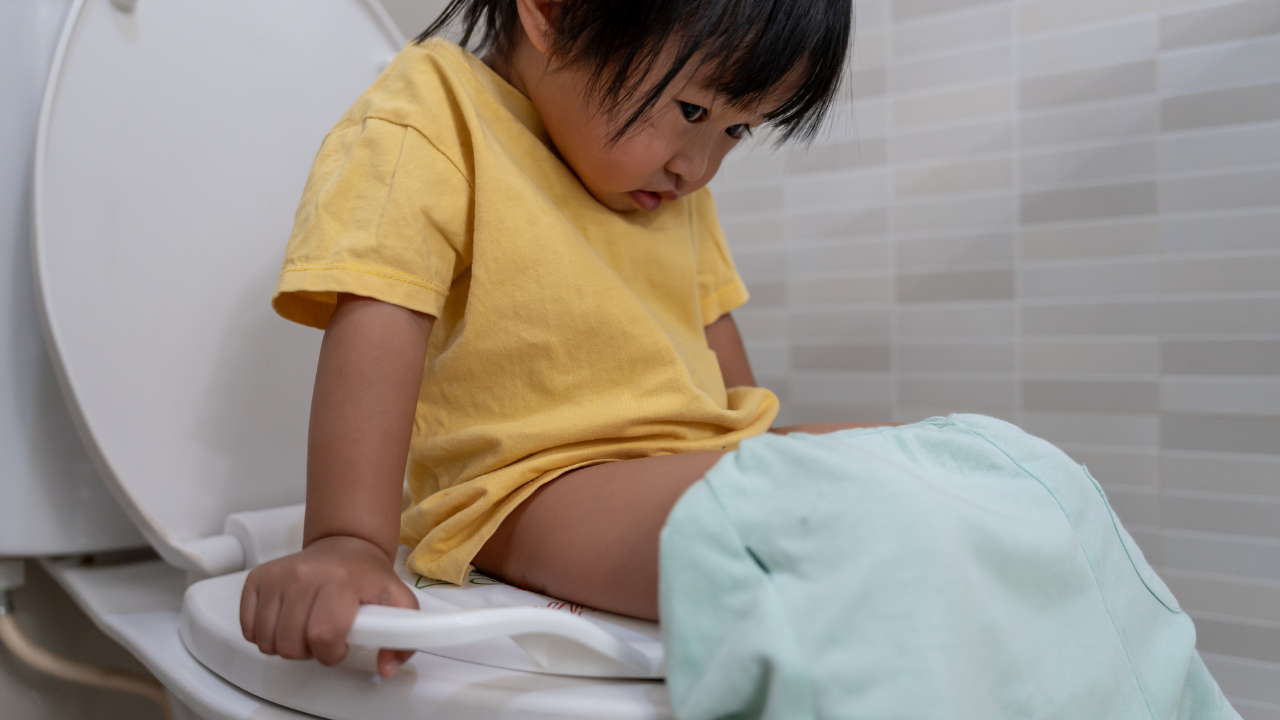
Potty training and poo problems can quickly become tangled together.
Perhaps your toddler was pooing normally before potty training but has suddenly started holding it in.
Maybe they'll wee happily on the toilet but refuse to poo.
Or perhaps they're asking for a nappy, hiding to poo, passing hard poos, or going several days without one.
When this happens, it's tempting to focus on getting the poo into the toilet.
But there's something much more important to deal with first:
Making sure your toddler feels comfortable and confident enough to poo at all.
Why Do Toddlers Hold Their Poo During Potty Training?
Pooing requires your toddler to recognise the sensation, relax their body and let the poo come out.
That's difficult to do if they feel worried or unsure.
A toddler may begin holding their poo because:
• they're uncomfortable pooing somewhere unfamiliar
• they're worried about pooing on the toilet
• they've previously had a painful or hard poo
• they prefer privacy when pooing, it was hidden in their nappy but feel more exposed on the toilet especially when being watched
• they don't want to stop playing
• they feel pressure around using the toilet
• their familiar way of pooing has suddenly been taken away
Sometimes withholding begins very subtly.
Your toddler might simply ignore the urge once or twice. But then the longer poo stays inside the bowel, the harder and more difficult it can become to pass. That can create a cycle that's much harder to break.
The Withholding and Constipation Cycle
Imagine your toddler has a hard poo and it hurts.
The next time they feel a poo coming, they remember that experience and try not to let it out.
The poo then stays inside for longer and can become harder.
Eventually they need to poo even more, but they're now even more reluctant to let it out.
So they hold again.
It can quickly become a cycle:
painful poo → withholding → harder poo → more pain → more withholding
This is why withholding isn't something I'd recommend trying to "push through" during potty training.
Getting your toddler pooing comfortably is more important than where they're doing it.
What Does Poo Withholding Look Like?
Withholding doesn't always look like a child simply saying, "I don't want to poo."
You might notice your toddler:
• becoming stiff or standing very straight
• crossing their legs
• clenching their bottom
• going onto their tiptoes
• hiding or becoming unusually quiet
• appearing to strain when they're actually trying to hold the poo in
• becoming distressed when they feel a poo coming
Parents can sometimes mistake these behaviours for their toddler trying to push a poo out. They may actually be doing the complete opposite.
What If My Toddler Will Only Poo in a Nappy?
Give them the nappy.
I know it can feel counterintuitive when you're potty training.
You might think:"If I stop giving them the nappy, they'll have no choice but to poo on the toilet."
Unfortunately, toddlers do have another option. They can hold it.
For a child who isn't yet comfortable releasing a poo on the toilet, removing their only safe way of pooing can encourage withholding.
If your toddler asks for a nappy specifically to poo, that's actually showing you something positive: they recognise that they need a poo and are communicating that need to you.
Protect comfortable, regular pooing first. You can work on moving the poo from the nappy to the toilet gradually afterwards.
Could My Toddler Be Constipated Even If They Still Poo?
Yes.
Constipation doesn't necessarily mean a child hasn't pooed for several days. A toddler can still pass poo regularly and be constipated.
Things to look out for can include:
• hard or pellet-like poos
• unusually large poos (some may even block the toilet)
• painful pooing
• straining
• withholding behaviours
• small amounts of poo or soiling in their underwear
• changes in how frequently they poo
If you're concerned that your toddler may be constipated, speak to your GP or another appropriate healthcare professional rather than trying to solve constipation through potty training strategies alone.
What Should I Do If I Think My Toddler Is Withholding or Constipated?
If you think your toddler may be withholding their poo or becoming constipated, the best thing to do is speak to your GP.
Don't wait until the problem becomes severe. Withholding and constipation can become a cycle, and the earlier it's addressed, the easier it can be to prevent it becoming an ongoing problem.
Your GP may recommend or prescribe a laxative to help soften the poo and make it easier to pass. This is important for several reasons.
Firstly, softer poo should be much easier for your toddler to pass without having to strain or put in lots of effort.
Secondly, if your toddler has started withholding because pooing has hurt, consistently passing soft, comfortable poos can gradually help break that association between poo = pain.
This won't necessarily happen immediately. Even once their poo is soft, your toddler may continue trying to hold it because they remember that pooing hurt before. They need time and repeated experiences of comfortable pooing to begin trusting that it isn't going to hurt anymore.
Finally, treating constipation helps prevent poo continuing to build up in the bowel. Ongoing constipation can cause the bowel to stretch, meaning it can hold increasingly large amounts of poo. This can make constipation harder to resolve and can sometimes contribute to soiling and wetting accidents too.
That's why, when constipation and withholding are involved, I would always focus on the physical problem first.
Get the poo consistently soft and comfortable to pass, with medical guidance where needed.
Then you can work gradually on rebuilding your toddler's confidence around pooing and, eventually, moving their poo to the toilet.
Trying to tackle the behavioural side while pooing is still painful or difficult is unlikely to get you very far. Your toddler needs to experience for themselves that pooing can feel comfortable again.
Should I Pause Potty Training If My Toddler Is Constipated?
This depends on where you are in the process and what's happening for your child.
What I wouldn't recommend is increasing the pressure around toilet use while constipation or withholding is developing. Your priority needs to be comfortable pooing.
That may mean reducing expectations temporarily, allowing your toddler to poo in a nappy if that's what they need, and getting appropriate support for the constipation.
Once pooing is comfortable again, you can gradually work on moving forward.
Don't Turn Pooing Into a Battle
When a toddler won't poo on the toilet, it's very easy for pooing to become the center of potty training.
Parents start asking:
"Do you need a poo?"
"Shall we try?"
"Just sit for a little bit longer."
"I know you need to go."
Even when these comments are well intentioned, your toddler may start feeling watched or pressured.
And the one thing we need a child to do in order to poo is relax.
Keep your response calm and matter-of-fact.
Preventing Poo Problems Is Easier Than Fixing Them
This is one reason I don't recommend forcing a child to give up their nappy for poos before they're comfortable doing so.
It can seem like keeping the nappy for pooing is delaying progress. But continuing to use a nappy for poos for a child who is struggling to use the toilet can often prevent withholding or constipation and long term will make the transition to the toilet from the nappy that much easier.
A gradual transition may feel slower in the moment, but protecting your toddler's confidence and keeping poo comfortable gives you a much stronger foundation to work from.
A Gradual Potty Training Approach Can Help
Potty training doesn't need to involve suddenly removing every familiar part of your toddler's toileting routine.
Within Potty Pros Academy, potty training happens gradually, with awareness, routines and confidence developing before greater independence is expected.
That gradual approach can be particularly helpful with poo because there's time to notice difficulties and respond to them rather than feeling that your toddler must immediately poo on the toilet because their nappies have been removed.
The aim isn't simply to get a poo in the toilet. It's to help your toddler become comfortable, confident and eventually independent with pooing.
FAQs
Is poo withholding normal during potty training?
It can happen during potty training, particularly when a toddler feels uncomfortable or worried about pooing without their nappy.
However, withholding shouldn't simply be ignored in the hope that it will pass. Repeated withholding can contribute to constipation, so it's important to address it early.
Should I give my toddler a nappy if they refuse to poo on the toilet?
Yes.
If your toddler is asking for a nappy specifically to poo, I would initially give it to them rather than risk encouraging withholding.
Once they're pooing comfortably and regularly, you can work gradually on transitioning where they poo.
How can I tell whether my toddler is withholding?
Look for behaviours such as stiffening their body, crossing their legs, clenching, standing on tiptoes, hiding or appearing distressed when they need a poo.
Some behaviours that look like straining can actually be attempts to prevent the poo from coming out.
Can constipation cause potty training accidents?
Yes. Constipation can affect both pooing and bladder function, and some children may experience soiling or changes in their usual toileting patterns.
If you're seeing ongoing accidents alongside signs of constipation, it's worth discussing them with a healthcare professional.
Should I stop potty training because of constipation?
Not necessarily, but constipation needs to take priority.
Avoid increasing pressure around the toilet and focus first on getting your toddler pooing comfortably. How much you adjust potty training will depend on your child's individual situation and where they are in the process.
Can Potty Pros Academy help with poo withholding?
Potty Pros Academy includes guidance for common potty training challenges, including children who want to poo in a nappy and difficulties around moving poos to the toilet.
However, the course is designed for children who are at the beginning of their potty training journey. If your child has finished potty training or is near the end and is constipated or you're concerned about their bowel health, you should also seek appropriate medical advice. Potty training support isn't a substitute for treating constipation.
If You Haven't Started Yet..
One of the best things you can do before removing nappies is help your toddler become familiar and comfortable with the toilet without putting pressure on them to perform.
That's exactly why I created my free guide: 5 Things to Do Before Starting Potty Training.
It walks you through five simple ways to start building awareness, routines and confidence before nappies come off.
Ready to get started?
Download my FREE guide on 5 Things You Can Do Before Potty Training.
These simple, practical tips will help you lay the groundwork — so when you do start potty training, the process is smoother, quicker, and less stressful for everyone.
Author